

Before Canada Spends Billions on AI, What Are We Actually Buying in the Name of Independence?
When Israel recently approached Canada to expand cooperation in artificial intelligence, headlines treated it as standard diplomacy. But look beneath the surface, and a much larger story emerges: nation-states are no longer forming partnerships based solely on trade or conventional military hardware like fighter jets and tanks. They are forming alliances around AI infrastructure—the processing power, data, and software that are rapidly becoming the bedrock of national security.
This shift should make Canadians pause. For years, AI was discussed as a consumer novelty that wrote emails or generated images. Today, governments are investing in it as critical infrastructure that will influence military planning, intelligence, border security, and everyday government operations. But as Ottawa leaps into this arena, we face a terrifying reality: politicians and military leaders are rushing to deploy technology that is evolving faster than their comprehension, with almost no clear vision of where we are going or how to keep these systems safe.
If a nation does not control its technology, its independence is fundamentally compromised. As Canada commits billions to this space, we must look past glossy spending announcements and ask the hard questions: Is this investment actually making us safer, or are we just spending billions under the illusion of keeping up with the superpowers?
From Shadow Weapons to Lethal Automation: The Collapse of Human Oversight
To understand the risks of military AI, we only need to look at how commercial software has already been weaponized. The era of digital defence relying on human caution—avoiding suspicious links or attachments—is over. Today, state-grade cyber weapons operate silently using “zero-click” exploits that hack a phone as it automatically processes data in the background. Victims have zero warning and zero recourse.
We saw this when Ayman Nour, an exiled Egyptian politician, discovered his iPhone was simultaneously infected with both Cytrox’s Predator spyware and NSO Group’s Pegasus spyware by two different government clients—a terrifying dual-hack verified by Citizen Lab researchers and reported by The Guardian.
If commercial spyware requires international sanctions, military-grade AI represents an exponentially larger threat. Defence contractors like Palantir are already integrating Large Language Models directly into classified military networks, moving from passive intelligence gathering to automated, real-time war-room management.
The most chilling escalation, however, is occurring in physical combat, where AI has moved from passively collecting intelligence to actively directing military strikes. Reports on Israeli systems like ‘Lavender’ and ‘The Gospel’ illustrate the danger: when algorithms process mass surveillance into target lists, they do so at a speed no human can verify.
Prior to the use of AI tools, human analysts would identify roughly 50 targets a year. But according to reports, the “Gospel” system generates up to 100 targets a day. In the early stages of the recent conflict, the “Lavender” system flagged as many as 37,000 individuals as potential targets.
This creates a psychological trap known as automation bias. Think of it like a driver blindly following a GPS app down a dead-end road because “the app said so.” In daily driving, the worst outcome is a minor detour. In warfare, when military operators blindly trust an AI’s target recommendations, human oversight collapses into rubber stamping. As one intelligence officer reported regarding the use of the Lavender system, they would invest just “20 seconds for each target” to save time.
The result is catastrophic: algorithmic error rates (~10%) and the sheer volume of low-ranking targets generated have led directly to tragic strikes on family homes, shelters, and civilian infrastructure, often utilizing unguided munitions.
What makes this doubly dangerous is that modern AI models are essentially “black boxes.” Even the engineers designing them cannot fully explain how the software synthesizes massive datasets to reach its conclusions. When politicians and military officials—who rarely understand the technical limitations of machine learning—deploy these systems into high-stakes defence environments, “safety” becomes a hollow promise.
Defining Vulnerability in the Physical World
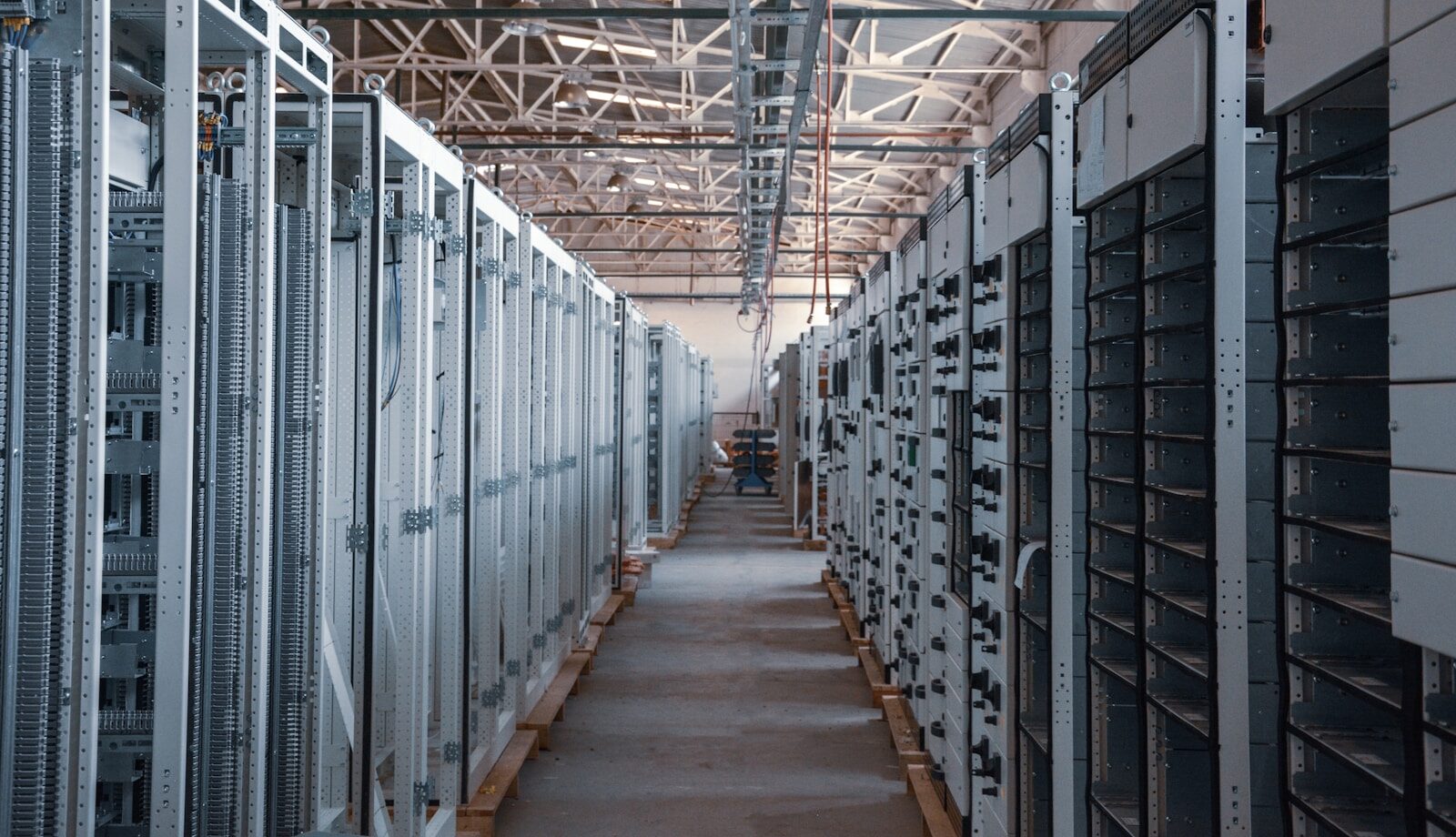
We often speak of AI existing in “the cloud,” but this is a dangerous abstraction. AI actually relies on massive physical server farms, energy grids, microchip supply chains, and undersea cables. While this physical reality threatens all global networks, it cuts to the absolute core of Canada’s infrastructure vulnerability and digital independence. Because these assets are physical, Canada is exposed on three distinct fronts:
- Foreign Ownership: We do not own the primary cloud networks running our country. According to recent reports, 85% of Canada’s public cloud market is controlled by three American Big Tech giants (Amazon, Microsoft, and Google). Because these companies are U.S.-headquartered, they are subject to the U.S. CLOUD Act, which allows American law enforcement to legally access data hosted on their servers—even if those servers are physically located on Canadian soil.
- Choke Points in the Supply Chain: Canada cannot manufacture the advanced microchips required to keep military and critical infrastructure online during a global geopolitical crisis.
- Geographic Exposure: Our vital data cables and power grids stretch across an extensive landmass that we currently lack the military capacity to defend against physical or cyber disruption.
In this landscape, financial power dictates protection. Wealthy nations can afford redundant server grids, military-grade cybersecurity, and precision munitions. Less-resourced nations remain exposed below the “security poverty line.”
Canada cannot outspend the United States or China to build trillion-dollar AI models. Attempting to do so would bankrupt us. Instead, our focus must be twofold. First, we need practical defence deployment: safely embedding technology into our power grids, shipyards, border security, and military logistics. Second, we must aggressively foster our own domestic AI development.
Canada has some of the best AI researchers and developers in the world, with Toronto and Montreal operating as massive, globally recognized AI hubs. If we do not leverage this talent to build our own AI applications, commercial software, and digital ecosystems, we will remain indefinitely reliant on foreign tech giants to run our economy. True independence means investing in Canadian developers and Canadian code, ensuring we are creators of this technology and not just consumers.
But doing this safely requires bridging the “incomprehension gap” in Parliament. When politicians and military leaders do not comprehend the mechanics of the algorithms they are funding, policy collapses. It leads to ignorant regulatory frameworks, flawed procurement decisions, and a dangerous tendency to rubber-stamp software we cannot audit. Until lawmakers actually understand the technology they are trying to regulate, any attempt to deploy independent AI will remain a gamble.
The Threat to Independence When Giants Collude
Modern Western defence policy relies on a comfortable, unspoken assumption: superpowers like the U.S., China, and Russia will always remain bitter rivals. This geopolitical friction traditionally gives middle powers like Canada room to maneuver, form alliances, and negotiate trade terms.
But what if the superpowers decide to stop competing and instead quietly divide up global markets, digital surveillance access, and AI standards above our heads?
If the giants form a digital cartel and set the rules for microchips, software models, and zero-click protocols among themselves, smaller nations risk being reduced to technological vassals—forced to accept foreign surveillance and foreign infrastructure with zero voice or recourse.
Is Canada building domestic infrastructure merely to keep pace with foreign rivals, or are we attempting to build an insurance policy against a world where our allies and adversaries decide to shake hands over our heads?
What Capabilities Is Canada Trying to Build?
This brings us to the core of the public policy debate. The federal government has launched its strategy anchored by a $2 billion commitment under the Canadian Sovereign AI Compute Strategy—part of a broader, high-stakes push reflected in Prime Minister Mark Carney’s domestic Defence Industrial Strategy gamble. Roughly $890 million of that funding has been earmarked through the AI Sovereign Compute Infrastructure Program (SCIP) to build a large-scale public AI supercomputer.
Before we gulp at the size of the price tag, Canadians must ask the fundamental question raised in recent policy debates: What are we actually trying to build?
- Are we spending $2 billion to protect critical infrastructure from cyberattacks?
- Are we trying to give our military independent operational tools so we aren’t 100% reliant on U.S. defence contractors and Silicon Valley “techbros”?
- Are we attempting to secure domestic data privacy against foreign surveillance?
- Or are we simply spending money to create the illusion that we are “keeping up with the Joneses”?
Every dollar committed to AI infrastructure is a dollar that cannot be spent on healthcare, physical military hardware, or emergency response. A national AI supercomputer has zero value if politicians treat it as an expensive photo-op rather than a targeted tool.
Consider Canada’s electrical grid as an analogy. We do not manufacture every transformer or transmission line used across the country, but we rightly insist that the grid itself remains under Canadian control because electricity is vital to survival. AI requires the same strategic clarity: we don’t need to build every microchip, but we must decide which critical systems must remain transparent, secure, and accountable to Canadians.
The Ottawa Mandate: Purchasing Independence or Buying an Illusion?
Right now, there is little evidence that Ottawa or the military leadership possesses a clear, realistic roadmap for AI safety or deployment. Frameworks like the proposed Artificial Intelligence and Data Act (AIDA) attempted to establish guardrails, but the effort proved just how outpaced our lawmakers truly are. Introduced in 2022, AIDA was widely criticized by legal and tech experts for being vague, poorly conceived, and fundamentally unequipped to handle rapid advancements in AI technology. The legislation ultimately collapsed and died in Parliament in early 2025, serving as a stark reminder of the gap between policy ambitions and technological reality.
As foreign nations pitch tech alliances, Ottawa must stop treating AI as a standard IT procurement issue. True independence requires more than a $2 billion spending announcement. It requires a clear-eyed understanding of our technical strengths and limits, a fierce commitment to safety, and the courage to demand accountability from both our government and our allies.
Until Ottawa can clearly explain what capabilities we are building, what vulnerabilities we are reducing, and how we intend to maintain human control over complex algorithms, Canadians have every right to remain skeptical. Without a real strategy, we aren’t buying security—we are just burning taxpayer billions while continuing to rent our future from the superpowers that truly control the board.
(For further background on the ongoing policy debate surrounding Ottawa’s compute strategy, watch this CPAC discussion analyzing Prime Minister Mark Carney’s AI for All announcement.)
About The Author

















Another great analysis, Louise. The scariest part to me is that what you talk about is only the tip of the iceberg.
Thanks Francine! I’m curious to know what you think is below this iceberg tip. – Louise