
There are not many places in Ottawa where a complete beginner and a professional artist can share the same space, the same tools, and the same sense of wonder. The Ottawa Glassblowing Co-Op is one of them.
Tucked into the creative fabric of the city, this community studio is doing something quietly remarkable. It’s taking one of the oldest and most technically demanding art forms in the world and making it available to anyone curious enough to show up. As one of only two glassblowing co-operatives in all of Canada, it occupies a rare and valuable space in Ottawa’s arts community, not just as a place to make things, but as a place where people connect, learn, and grow together.
We sat down with the co-op to talk about molten glass, creative community, and why letting go of perfection might be the most important skill you can learn.
Q: How would you describe the art and science of glassblowing to someone who’s never seen it — what does the process really involve step by step, and what makes it unique as an art form?
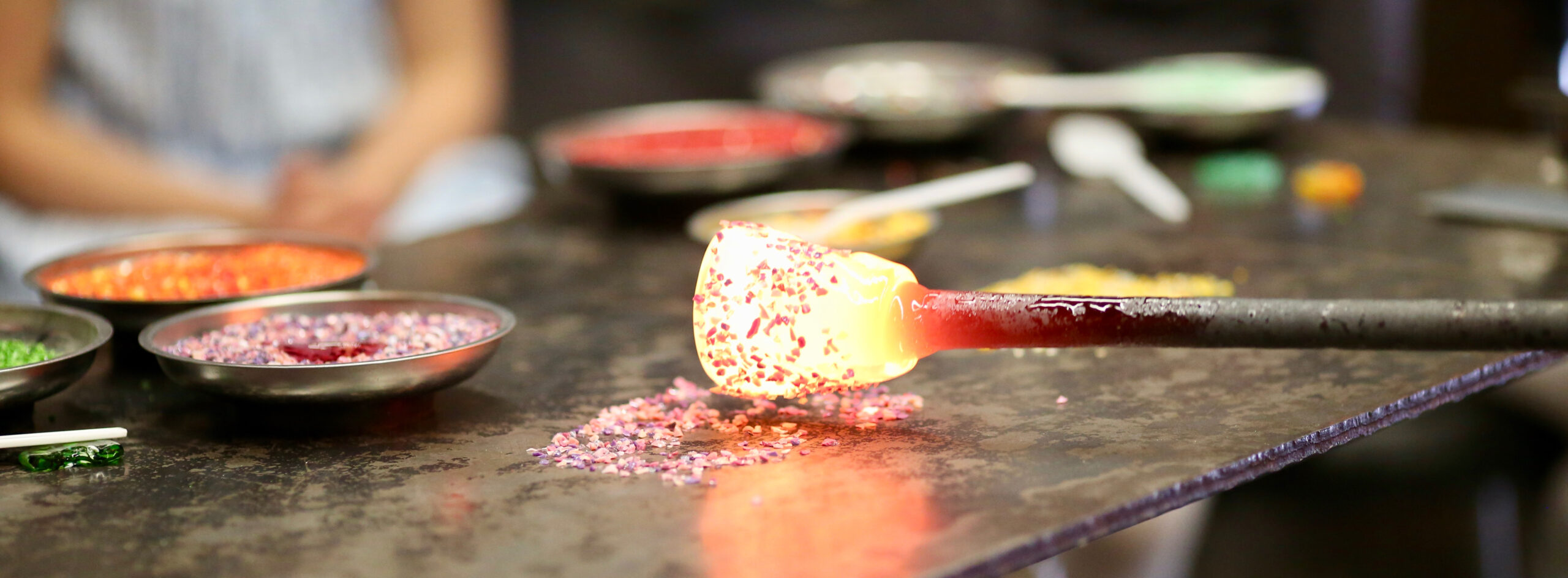
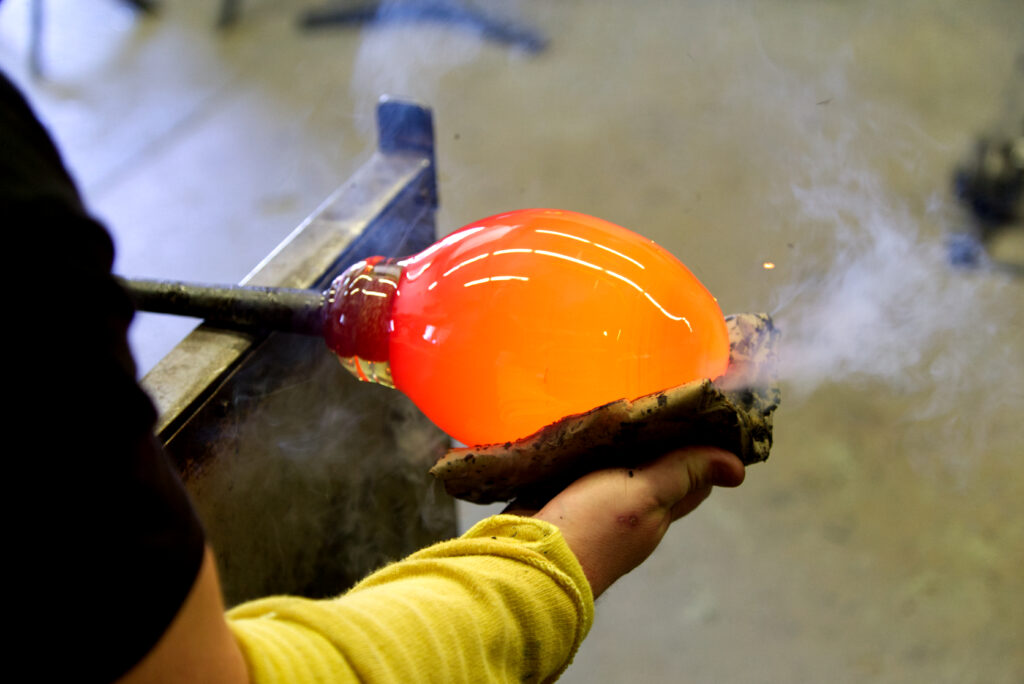
Glassblowing sits right at the intersection of physics, chemistry, and art. We start by gathering molten glass from a furnace that runs at about 1100°C. From there, the glass must be constantly reheated so that it can be shaped with gravity, breath, and tools. Working as a team, your piece takes shape as you continue turning, blowing, cooling, and reheating. What makes it unique is that the material is always moving. You can’t pause it. You have to respond to it in real time, and that creates this incredible mix of control and surrender that you don’t find in many other art forms.
Q: What inspired the creation of the Ottawa Glassblowing co-op, and how does the co-operative model shape the community and experience here?
The co-op was founded with the goal of making glassblowing more accessible. The equipment is too expensive and complex for most individual artists to own, and traditional studios often cater to professional glassblowers. The co-operative model allows people to share resources, knowledge, and space while keeping the cost reasonable for hobbyists and professionals alike. This structure creates a very different culture from a traditional studio. Members aren’t just renting time — they’re contributing to the survival and growth of our organization. They are involved in various aspects of the co-op, like helping with studio upkeep, running events, sitting on the Board of Directors and various committees, promoting classes and engaging with the public. Everyone has a role in building this supportive, collaborative and creative environment.
Q: Can you explain what makes your space different from other art studios or traditional glassblowing schools?
We’re one of only two glassblowing co-operatives in Canada, and that changes everything. We serve complete beginners, hobbyists, and professional artists under the same roof. You can take your first class here with no experience, come back for practice time, and finally advance to unsupervised rental. Many of our members eventually go on to exhibit and sell their work. That full pathway — from first gather to professional practice — exists in one community space.
Q: What are the most common misconceptions people have about glassblowing before they try it?
Most people think it’s a solo activity, when it’s actually deeply collaborative. They’re also surprised by how physical it is — you’re constantly moving — yet so much of it is about timing and teamwork rather than strength.
Q: What kinds of tools and furnaces do you use here, and how do they contribute to the creative process?
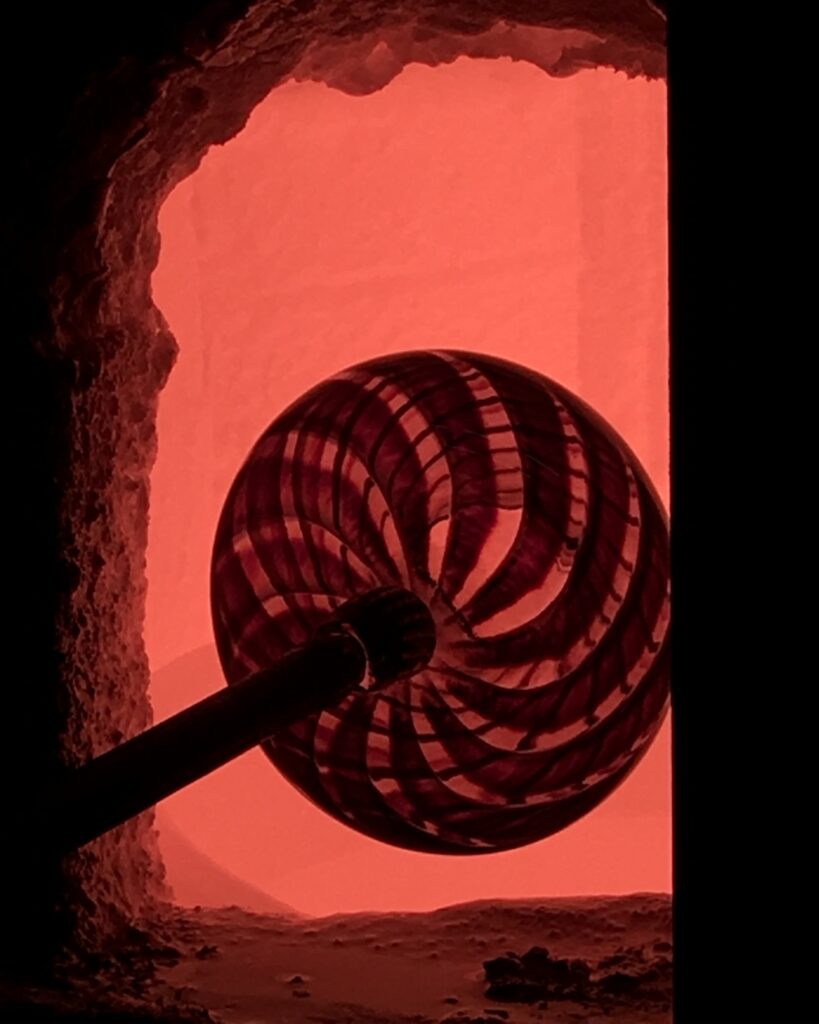
At the heart of the studio is the furnace that holds the molten glass, along with a reheating chamber called the glory hole and annealers that cool the work in a controlled way. To shape the glass, we use a whole family of hand tools — jacks, blocks, paddles, shears — many of which haven’t changed in centuries. Each tool is used to manipulate the glass in a different way. The studio setup determines what’s possible to make and how far an artist can push their ideas.
Q: For a complete beginner, what’s the most important safety tip you’d give before they pick up their first blowpipe?
Listen to your instructor and move with intention. The studio is very safe when you’re aware of your surroundings and working as a team. Glassblowing isn’t about rushing — it’s about rhythm and communication.
Q: How do you balance teaching technique versus encouraging individual artistic expression in your classes?
Technique is what gives you freedom. We teach core skills so students can safely control the material, and then we create space for them to make choices — colour, form, scale. Even in the first class, no two pieces come out the same.
Q: What’s the most challenging part of learning glassblowing for most students?
Letting go of perfection. Glassblowing has a steep learning curve, and progress comes from repetition. Once students embrace the process instead of the outcome, everything starts to open up.
Q: Can you share an example of a breakthrough moment for a student — when something “clicked” for them?
It’s often the first time someone moves from reacting to the glass to anticipating it — when they turn at the right speed without being told, or shape a form confidently. You can see the shift immediately. They stop fighting the material and start working with it.
Q: How much does technique versus intuition matter when shaping molten glass?
They’re inseparable. Technique builds the muscle memory that allows intuition to take over. At a certain point, you’re not thinking in steps — you’re instinctively responding to heat, weight, and movement.
Q: What are some of the most unusual or ambitious projects members have created here?
We’ve seen everything from large sculptural installations to intricate colour-patterned vessels to collaborative projects for exhibitions. Because it’s a co-op, artists can inspire each other’s work in meaningful ways.
Q: How has membership in the co-op impacted local artists’ work or careers?
It gives artists consistent access to equipment, a skilled studio team, and a knowledgeable community. That continuity allows them to develop a body of work, apply for exhibitions and grants, and build sustainable creative businesses.
Q: What role does colour play in glassblowing, and how do you choose or mix colours for a piece?
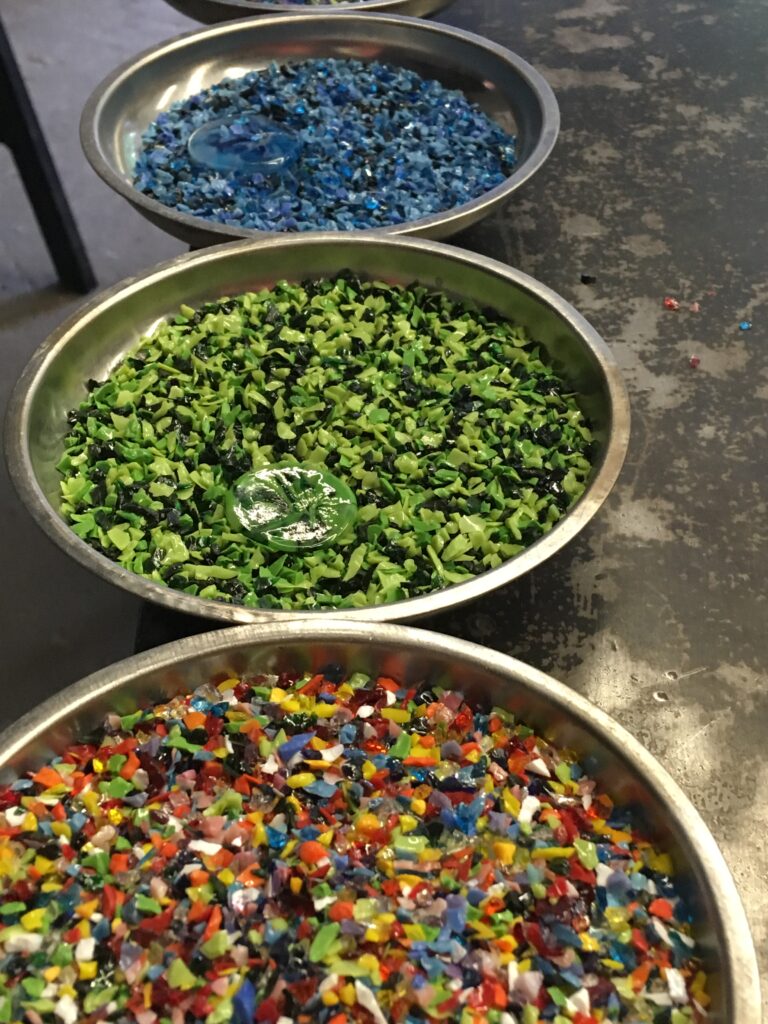
Like many other art forms, the choice of colour can really transform a piece and it’s a major way that artists express themselves. Colour isn’t applied to the surface of a finished piece — it’s melted into the piece as it takes shape. Choosing colour is part design, part chemistry, and part experience. The same colour can look completely different depending on how it’s worked.
Q: Do you ever collaborate with local galleries, events, or other art communities in Ottawa?
All the time — through exhibitions, markets, Doors Open Ottawa, workshops, and visiting artist residencies. Community connection is central to our mandate.
Q: What advice would you give to someone who wants to turn glassblowing into a professional endeavor?
Show up consistently, build your team, focus on access to studio time, and be patient with yourself and the learning process. Glassblowing is a long-term practice — the artists who grow are the ones who stay engaged with the community.
Q: How do you see glassblowing evolving as an art form here in Ottawa over the next few years?
With more public engagement and accessible pathways for emerging artists, the diversity of voices working in glass is increasing, allowing the artform to evolve in new and exciting ways. We’re seeing more cross-disciplinary work that highlights the creativity of local artists.
Q: What’s one thing visitors or first-time students are always surprised to learn about your studio?
How welcoming it is. People expect their first glassblowing experience to feel intimidating, and instead they find a collaborative, supportive environment where everyone wants them to succeed.
Q: Can you explain the process you follow after a piece comes out of the hot shop — from annealing to pick-up?
After the piece goes into an annealer, it cools slowly over many hours to reduce internal stress that would otherwise cause the glass to break. The next day it moves to the cold shop for finishing — cutting, grinding, polishing — and then it’s ready for pickup.
Q: How do workshops like team-building or private events differ from regular classes in terms of learning and engagement?
Workshops focus more on shared experience. People work together to make something memorable, with an emphasis on connection and collaboration.
Q: What’s one piece of advice you wish every beginner glassblower would take to heart before their first session?
You don’t have to be good at it right away. Nobody is. That’s actually the whole point of showing up.
Ottawa is a city full of hidden creative corners, and the Ottawa Glassblowing Co-Op is one worth finding. Whether you’re an artist looking for a professional home, or someone who has simply always been curious about what it feels like to shape something out of fire, there’s a place for you here.
In a world that moves fast and rewards polish, there’s something genuinely valuable about an art form that demands you slow down, pay attention, and work with other people. The co-op isn’t just teaching glassblowing. It’s teaching a different way of being in a creative community.
And sometimes, that’s exactly what a city needs.

To learn more about classes, membership, and upcoming events, visit the Ottawa Glassblowing Co-Op.
About The Author