
Sometimes a news story is so absurd that it makes you wonder if you read it right. Last week, Donald Trump suggested that Canada should face additional tariffs because wildfire smoke from our forests drifted into the United States. His argument was simple enough: Canada has failed to maintain its forests, Americans are suffering because of the smoke, and Canada should compensate the United States through higher tariffs on Canadian goods.
I don’t believe for a second that Donald Trump actually thinks tariffs stop wildfire smoke. Nor do I believe this proposal has much to do with forest management. I think he understands exactly what he’s doing.
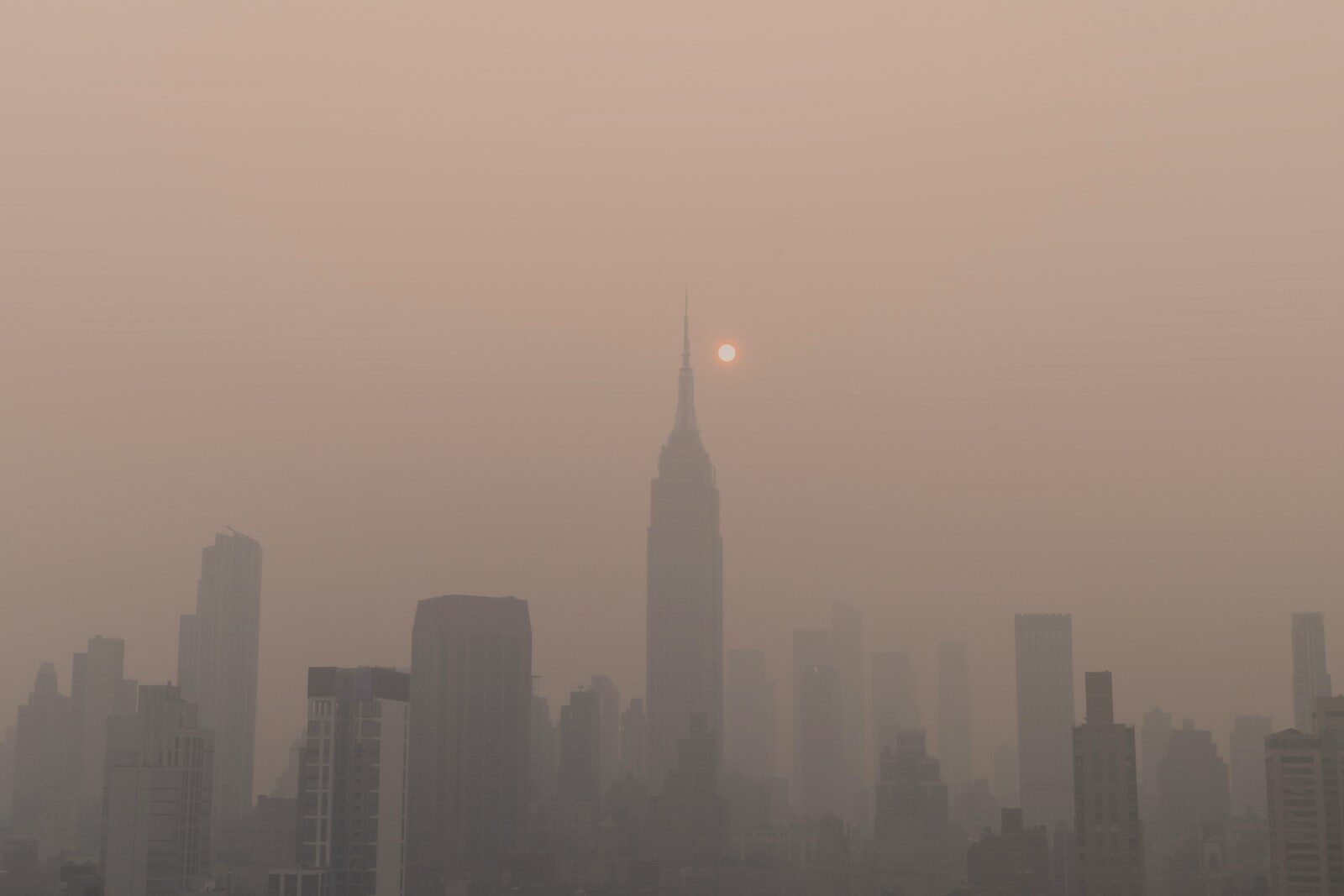
Millions of Americans have spent parts of this summer looking out their windows at orange skies, breathing unhealthy air and wondering why it is happening. They are frustrated, and understandably so. Frustrated people want explanations, and good explanations are often complicated. They involve climate trends, drought, lightning strikes, decades of forest management practices, changing weather patterns and the reality that Canada and the United States share one atmosphere.
That is a complicated story to tell. It is much easier to tell another one.
Canada is to blame.
Throughout history, leaders have discovered that people rarely rally around complexity, but they will readily unite against a common enemy. Blame offers certainty. It transforms uncertainty into indignation and replaces uncomfortable questions with satisfying answers. Whether those answers are true becomes almost secondary. Their political value lies in their simplicity.
But, reality is rarely interested in political convenience.
Wildfire Smoke Doesn’t Care About Borders
Canada’s boreal forest covers roughly 350 million hectares, making it one of the largest intact forest ecosystems on Earth. Much of it lies in remote wilderness with no roads, no permanent settlements and no practical means of preventing every naturally occurring wildfire. Many of this year’s largest fires were ignited by lightning, just as they have been for thousands of years.
Forest management is enormously important. Prescribed burns, Indigenous fire stewardship, fuel reduction around communities and investment in firefighting capacity all deserve serious discussion. Those are practical measures that can reduce risk and protect lives.
But to suggest that Canada could somehow groom an ecosystem larger than many countries so perfectly that smoke would never cross an international border – is ridiculous.
Wildfire smoke has no passport.
It doesn’t stop at customs. It doesn’t recognize sovereignty or consult trade agreements before drifting across the 49th parallel. The same atmospheric currents that carry Canadian smoke south have carried wildfire smoke from California, Oregon, Washington and Minnesota north into Canada many times before. Nature has never shown much respect for political boundaries.
Neither do tariffs.
A tariff is a tax on imported goods. It doesn’t extinguish a wildfire, redirect the jet stream or alter atmospheric chemistry. It is collected from American importers, with costs often passed along to American manufacturers, businesses and consumers. Taxing Canadian aluminum doesn’t put out a fire. Taxing auto parts doesn’t stop lightning from striking a dry forest in northern Saskatchewan.
The proposal bears no meaningful relationship to the problem it claims to solve.
Which raises an obvious question.
If this isn’t really about wildfire smoke, what is it about?
The Comfort of Simple Villains
I think it’s about something far more familiar than wildfire smoke.
It is about the political value of blame.
Complex problems demand complex solutions. They require cooperation, patience and a willingness to accept that no single person, country or policy can fix everything overnight. Those conversations are difficult because they ask something of us. They require us to think beyond the next election, the next quarterly earnings report or the next news cycle.
Blame asks nothing of us.
If Canada is the problem, Americans don’t have to wrestle with the realities of climate change, prolonged drought, changing forests or the difficult choices that both countries will have to make in the decades ahead. If one villain can be identified, then one villain can be punished. It feels satisfying, even if it solves nothing.
That is why this kind of politics is so effective – it offers emotional relief in lieu of practical solutions.
When I read Trump’s comments, I wasn’t offended because they insulted Canada. Countries criticize one another all the time. What offended me was watching millions of people being encouraged to direct their anger toward their neighbours instead of toward understanding the problem itself.
The Politics of Stupidity
People often point to wealth, power or electoral success as evidence of intelligence. I think we have made a profound mistake.
Imagine a chief executive who wants to maximize this quarter’s profits. He cuts research and development, postpones maintenance, ignores safety upgrades and lays off experienced employees. Investors celebrate. The share price rises. His bonus arrives right on schedule.
Five years later, the company is collapsing. Was he intelligent? Or was he simply rewarded for spending tomorrow’s resources today?
We are facing the same questions when we look at how to manage our planet.
A government can underfund infrastructure to balance this year’s budget. A corporation can exhaust natural resources to maximize shareholder returns. A politician can inflame division because outrage is politically expedient. Each decision may produce immediate rewards. Each may even be celebrated as a clever strategy.
But intelligence cannot be measured only by what happens today. Sooner or later, every decision encounters reality.
History has very little interest in quarterly profits, election victories or stock valuations. It has an even shorter memory for political slogans.
History doesn’t judge civilizations by how much wealth they accumulated. It judges them by whether their way of thinking allowed them to survive.
That is the only score history keeps.
Did a civilization understand the systems that sustained it? Did it leave its descendants a healthier society than the one it inherited? Did it recognize problems early enough to solve them? Or did it repeatedly exchange tomorrow for today because tomorrow belonged to someone else and who cares about them?
This is why the wildfire smoke story stayed with me long after I finished reading it. Not because I think tariffs on Canadian goods are a serious response to an environmental problem. It’s because once again, I am seeing a way of thinking that values immediate political advantage over long-term solutions.
The Earth itself will endure. It has survived asteroid impacts, ice ages and mass extinctions. But we—and countless other forms of life that share this planet with us—will flourish because of the choices we make, or suffer because we repeatedly rewarded those who found it easier to manufacture enemies than solve problems.
You cannot negotiate with physics. You cannot tariff the wind. And you cannot build a durable civilization by convincing people that their neighbours are the problem while the real challenges continue to grow.
Perhaps that is the most important measure of intelligence after all—not how effectively we exploit the present, but whether our way of thinking guarantees a future worth inheriting.
About The Author