
Automation is making billionaires richer, while threatening to make many workers expendable. We can keep innovation and still share its gains if we build an Automation Dividend, protect wages, and lower the cost of essentials so people aren’t punished for progress.
I’ve spent more than 25 years working in web design and programming. A few months ago, a friend asked me if they could pitch a new website to one of my clients whose site was dated. I was puzzled. The friend was not a web designer, so I wondered what prompted him to make such a sudden career change. The answer was simple. AI.
As I opened the site he had done, I almost died. This thing was fast, and visually very attractive. It did everything right; the call to action, the main statements above the fold, the easy contact information… Everything was where it should have been.
So I had to see for myself. I went to Claude and did a test. I gave it specific guidelines and had it create me a basic site. Within minutes, I had something that was far better and faster than anything I have ever created. Like EVER. While truly amazed by how powerful this is, it left me feeling obsolete, expandable and a little threatened.
AI has made my life easier. As a writer, publisher and business owner, I use it regularly to cut down on the mundane tasks and free time. On a larger scale, I can see its potential to improve healthcare, advance scientific discoveries, help small businesses and make our everyday lives better.
But the more I use it, the more one question bothers me.
What happens to the people whose jobs AI makes unnecessary? And more importantly, when the machines start doing the work, who gets paid? Does it drive prices down? I mean, how much can my friend charge a customer for something that took minutes to make?
This Isn’t Like the Last Technological Revolution
Every time someone raises concerns about artificial intelligence eliminating jobs, I hear the same argument. Technology has always replaced jobs. New jobs will be created. People will adapt.
Yeah, sure, historically, that’s been true. The automobile replaced entire industries built around horses. Computers changed how offices operated. The internet transformed retail, communications and publishing.
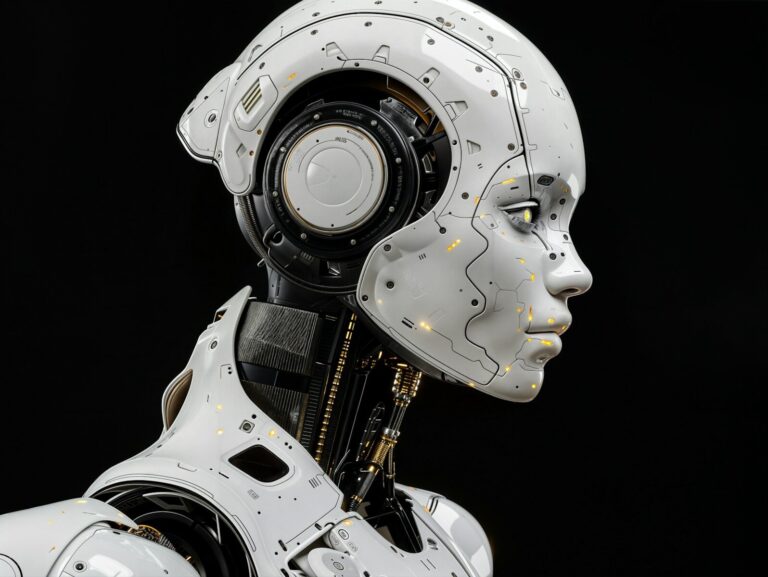
But AI is different in one important way. It’s not just replacing repetitive physical labour. It’s increasingly performing work that once required years of education and experience. Remember my 25 years of learning and experience that went out the window? Lawyers, accountants, programmers, journalists, designers and administrative professionals… We’ve already seen parts of our jobs handed over to machines. Heck, some of us handed it over ourselves! It will become a problem, and if you think physical labour is safe, it might be. For now. But know that In China, humanoid robots are being tested and deployed in factories, performing tasks such as moving materials and handling components, doing quality control even. They’re not replacing entire workforces yet, but it’s getting there fast.
Of course, new jobs will emerge. Someone will have to build, maintain and supervise these systems. But will there be enough new jobs to replace the old ones? And what happens to a 55-year-old factory worker whose position disappears? Are we seriously going to tell that person to go back to school and become a robotics engineer?
That’s not a realistic solution.
The Problem With Eliminating Your Customers
Let’s imagine a company employing 500 people. It invests in AI and robotics and discovers it can produce the same amount of goods with only 100 employees. Productivity increases. Operating costs fall. Profits rise. The shareholders are thrilled.
But what happens to the other 400 people? Their mortgages don’t disappear. Neither do their grocery bills, car payments or electricity bills. They still need money to survive.
And here’s where capitalism runs into a problem of its own making.
Businesses need customers. Customers need money. And for most people, that money comes from working. If enough businesses replace their employees with machines, who’s going to buy what those machines produce? One company can reduce its workforce and continue selling to customers employed elsewhere. But when automation spreads across entire industries, the question becomes much bigger. We could end up with an economy capable of producing more than ever, while millions of people struggle to afford what it produces.
Something about that doesn’t make sense.
Companies Aren’t Going to Share Their Profits Out of Kindness
I’m a business owner. I understand why companies invest in technology. If something allows me to accomplish in one day what previously took a week, of course I’m going to use it. And companies should be able to benefit from innovation. But there’s another side to that equation. When a business replaces workers with automation, it may save a substantial amount of money. Those savings can increase profits and benefit owners and investors.
Meanwhile, the people who lose their jobs may need unemployment assistance, retraining or other public support. Families absorb the financial losses. Communities lose spending power. Governments face greater pressure on social programs. In other words, the benefits of automation can remain private while many of its costs become public.
And no, I don’t expect corporations to voluntarily hand over a portion of their profits because it’s the nice thing to do.
We live in a capitalist society. So we need a solution that works within that reality.
What About an Automation Dividend?
Let companies innovate. Let them automate. Let them become more productive. But establish a system where a modest, predictable portion of the extraordinary profits and capital gains generated in an increasingly automated economy contributes to a public investment fund.
Call it an Automation Dividend.
I’m not suggesting we tax every robot or charge a business every time someone uses ChatGPT. That would be counter productive. Instead, we could look at how corporate profits and investment gains are taxed, close loopholes if necessary, and direct a defined portion of the resulting revenue into an independently managed, publicly audited fund.
The fund could initially support workers who lose income because of automation. As it grows, and if the finances allow it, it could eventually provide a modest dividend or help fund essential public services.
There are precedents for public funds sharing economic wealth with residents. Alaska’s Permanent Fund, for example, distributes dividends financed through investment earnings associated with the state’s resource wealth.
AI is different from oil, and measuring its contribution to profits would be complicated. That’s why a practical proposal would need to focus on taxable economic gains rather than pretending we can calculate exactly how much money each individual robot produces.
The principle, however, is straightforward. If technological progress creates enormous new wealth, ordinary people should have an opportunity to share in it.
Protect People’s Income While They Adapt
An Automation Dividend wouldn’t solve everything overnight. We would also need better protections for people whose careers are disrupted.
Imagine a journalist earning $70,000 a year who loses her job because her employer automates much of its editorial work. She eventually finds another position, but it pays $45,000. She’s employed again, but she’s lost $25,000 in annual income. A temporary wage-insurance program could replace part of that difference while she adjusts, retrains or finds another opportunity.
And what about working hours?
If AI allows employees to accomplish five days of work in four, why shouldn’t workers benefit from that increased productivity? Why should every efficiency gain automatically mean fewer employees instead of fewer working hours?
We could encourage businesses to experiment with shorter workweeks, profit-sharing and employee ownership.
The objective shouldn’t be to preserve every existing job forever. It should be to ensure that people aren’t financially ruined because technology has made their work less necessary.
Making Life More Affordable Has to Be Part of the Plan
There’s another piece to this discussion. If employment becomes less secure, we need to make sure people can still afford the basics. Housing. Food. Electricity. Healthcare. Education.
Now, I know saying we should make essentials cheaper sounds wonderful in theory. But we live in a capitalist economy. Governments can’t simply order every grocery store, landlord and utility company to lower their prices and expect everything to work out. Prices are influenced by production costs, supply, demand, competition and regulation.
So what would making essentials more affordable actually look like?
For housing, it could mean building more public, non-profit and cooperative housing, increasing supply and strengthening tenant protections. When affordable homes are scarce, people are forced to compete for whatever is available. Building more housing that isn’t primarily driven by maximizing investor returns could help reduce that pressure.
For groceries, it could mean stronger enforcement against price-fixing and anti-competitive behaviour, better opportunities for independent retailers and improvements to supply chains. That doesn’t mean every grocery price will suddenly drop. But competition and effective oversight can help prevent consumers from paying more because markets aren’t functioning properly.
For electricity and other utilities, governments can regulate rates, invest in infrastructure and provide targeted support to households that need it. And public services matter too.
Consider healthcare in Canada.
We already understand the concept of paying collectively for something essential. Medically necessary hospital and physician services are generally funded through taxes, so patients don’t receive a bill every time they see a doctor or need hospital treatment. The healthcare system still costs money. We simply share much of that cost rather than leaving each person to pay at the moment they need care.
The same principle can apply, in different ways, to other necessities.
Sometimes making life more affordable doesn’t mean lowering the price on the shelf. It means reducing what comes out of a household’s pocket.
A housing benefit, for example, might reduce someone’s monthly housing expenses even if the advertised rent remains unchanged. But it would need to be paired with more housing supply, or some of that assistance could end up contributing to higher rents.
And none of these programs would be free. They would require public revenue, careful planning and decisions about priorities. That’s where a properly funded Automation Dividend could play a role. If AI increases productivity and generates additional taxable wealth, some of that revenue could help strengthen the services and protections people depend on.
But cheaper essentials alone won’t replace a lost salary. Someone who loses a $60,000 job isn’t going to be saved by paying $50 less for groceries. That’s why income protection, affordable services and broader participation in the wealth generated by automation need to work together.
This Is About Preventing an Economic Collapse
There’s something else we need to consider. This isn’t just about protecting displaced workers. It’s about protecting the economy itself. Think about how our economic system works. People earn money. They spend that money on groceries, housing, transportation, entertainment and countless other things. Businesses use that revenue to pay their employees, suppliers and operating expenses. Those employees spend their wages, and the cycle continues.
Now imagine millions of people losing their jobs to automation over a relatively short period.
They stop going to restaurants. They put off buying cars. They cancel subscriptions. They spend less at local businesses because they simply can’t afford to spend more. Those businesses begin losing customers. Some cut staff. Others close. More people become unemployed. More households reduce their spending.
Meanwhile, governments collect less income tax and face greater demand for unemployment benefits and other assistance.
The problem begins feeding itself.
We could have factories capable of producing goods faster and cheaper than ever before, but fewer people with the money to purchase them. And that’s where the danger lies. AI could help create extraordinary wealth while contributing to the loss of purchasing power that keeps the economy functioning. Now, I’m not suggesting that AI will inevitably cause an economic collapse. Automation can also lower prices, create new industries and increase incomes. Governments have tools to respond to recessions and unemployment.
But if job displacement happens faster than new opportunities and income protections emerge, the risk of serious economic disruption becomes much greater.
And that’s why an Automation Dividend isn’t just about fairness. It’s about economic stability. It’s about keeping money circulating through the economy. Keeping families financially secure. Keeping businesses supplied with customers. Keeping governments capable of funding the services people depend on. Because what good is producing more if fewer people can afford to buy it?
We shouldn’t have to wait for widespread unemployment, falling consumer spending and struggling businesses before addressing that contradiction. If capitalism depends on people having money to spend, then protecting purchasing power in an automated economy isn’t necessarily anti-capitalist. It may become essential to keeping the system functioning.
How Do You Sell This in a Capitalist Society?
This is probably the biggest obstacle. Corporations aren’t generally lining up to support proposals that would increase their taxes. So how do we make something like this viable?
By recognizing that economic security isn’t just good for workers, but also crucial for businesses.
Companies need customers who can afford their products. Governments need a stable tax base. Communities need people who can pay their bills and participate in the local economy.
If automation produces widespread unemployment and financial insecurity, businesses and governments will eventually feel the consequences too.
An Automation Dividend could be structured as a form of economic insurance. Start small. Establish clear rules. Protect smaller businesses from disproportionate costs. Audit the fund publicly. Measure the results. If the program works and sustainable revenues increase, expand it. If something isn’t working, change it.
The goal wouldn’t be to punish businesses for becoming more efficient.
It would be to prevent the economic benefits of that efficiency from becoming so concentrated that the rest of society struggles to function.
There would be difficult questions about taxation, international competition, investment and government accountability. Those questions deserve serious answers. But dismissing the idea because corporations might object isn’t an answer either.
We Need to Talk About This Before It’s Too Late
What worries me most about AI isn’t the technology itself. It’s how quickly we’re embracing it without having an equally serious conversation about the consequences. We’re racing to build smarter systems, faster software and increasingly capable robots. We’re celebrating every breakthrough. And in many cases, we should be celebrating.
But where’s the same urgency when it comes to protecting the people whose livelihoods may disappear?
We shouldn’t wait until millions of people are unemployed before deciding whether our economic system needs to adapt. I don’t want to stop AI. I want it to help cure diseases, improve education, reduce exhausting labour and make life better. I want small businesses to thrive because they can finally access tools that were once available only to large corporations. I want people to have more time with their families, more opportunities to create, and fewer hours spent doing work that machines can handle.
But I don’t want a future where a handful of companies become unimaginably wealthy while everyone else fights over a shrinking number of jobs.
And I certainly don’t want us to discover, too late, that in our rush to eliminate labour costs, we’ve also undermined the purchasing power that keeps businesses alive.
We’ve spent centuries inventing machines to make our lives easier. We may finally be approaching a time when those machines can perform a substantial share of the work for us. That should be something to celebrate. But if the machines do the work and only their owners get paid, we haven’t created a better future.
We’ve simply found a more efficient way to concentrate wealth, while putting the economy itself at risk.
Progress should mean people can work fewer hours without becoming poorer.
And if we’re smart enough to create machines capable of transforming our economy, surely we can put some of that same intelligence into making sure the people who live in it aren’t left behind.
About The Author